Posts tonen met het label gardening. Alle posts tonen

dinsdag

BONSAI GARDENING [10]


Bonsai (盆栽?, lit. plantings in tray, from bon, a tray or low-sided pot and sai, a planting or plantings, About this sound pronunciation)[1] is a Japanese art form using miniature trees grown in containers. Similar practices exist in other cultures, including the Chinese tradition of penjing from which the art originated, and the miniature living landscapes of Vietnamese hòn non bộ. The Japanese tradition dates back over a thousand years, and has its own aesthetics and terminology.
"Bonsai" is a Japanese pronunciation of the earlier Chinese term penzai. A "bon" is a tray-like pot typically used in bonsai culture.[2] The word bonsai is often used in English as an umbrella term for all miniature trees in containers or pots, but this article focuses on bonsai as defined in the Japanese tradition.
The purposes of bonsai are primarily contemplation (for the viewer) and the pleasant exercise of effort and ingenuity (for the grower).[3] By contrast with other plant cultivation practices, bonsai is not intended for production of food, for medicine, or for creating yard-size or park-size gardens or landscapes. Instead, bonsai practice focuses on long-term cultivation and shaping of one or more small trees growing in a container.
A bonsai is created beginning with a specimen of source material. This may be a cutting, seedling, or small tree of a species suitable for bonsai development. Bonsai can be created from nearly any perennialwoody-stemmed tree or shrub species[4] that produces true branches and can be cultivated to remain small through pot confinement with crown and root pruning. Some species are popular as bonsai material because they have characteristics, such as small leaves or needles, that make them appropriate for the compact visual scope of bonsai.
The source specimen is shaped to be relatively small and to meet the aesthetic standards of bonsai. When the candidate bonsai nears its planned final size it is planted in a display pot, usually one designed for bonsai display in one of a few accepted shapes and proportions. From that point forward, its growth is restricted by the pot environment. Throughout the year, the bonsai is shaped to limit growth, redistributefoliar vigor to areas requiring further development, and meet the artist's detailed design.
The practice of bonsai is sometimes confused with dwarfing, but dwarfing generally refers to research, discovery, or creation of plant cultivars that are permanent, genetic miniatures of existing species. Bonsai does not require genetically dwarfed trees, but rather depends on growing small trees from regular stock and seeds. Bonsai uses cultivation techniques like pruning, root reduction, potting, defoliation, and grafting to produce small trees that mimic the shape and style of mature, full-size trees.

Mugo pine and Ezo spruce, Pinus mugo and Picea glehnii, bonsai since 1985.

This Chinese hackberry, Celtis chinensis, has been trained as bonsai for more than 40 years.K
Catlin elm, Ulmus parvifolia 'Catlin', a miniature grove of 20 small trees.
K
Willow-leaf fig, Ficus salicifolia, bonsai since 1986.
Trident maple, Acer Buergerianum, bonsai since 1880, about 8 feet high. 
WIKIBONSAI
WIKI

woensdag

GARDENING [9] LA FOCE

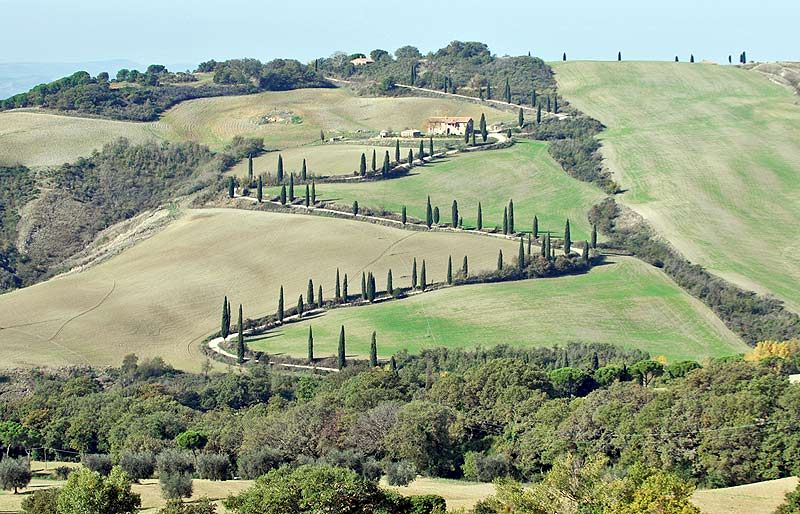
LA FOCE's Superview


One of the most stunning artificial views was created by Cecil Pinsent. Pinsent was an architect who had the good fortune to find a wealthy and influential patron when he was still in his early twenties. He was taken up by the American art historian Bernard Berenson. [Google all those Berenson's and you will see Marisa was his grandniece] He created quite some gardens in Italy of which I want to mention La Foce, to which this view belonged.


La Foce
Benedetta Origo
"...And then three years later, after my American great-grandmother had given my parents
enough money for a water pipe from a spirng six miles away,
he(Pinsent) was able to start this first little garden."

Oh, and this YouTube filmexplains more about La Foce. I almost forgot...


A lot has been written about all of Pinsent's work. Here is another link to another villa: i Tatti, 
It will lead you on to other interesting links.


dinsdag

GARDENING [8] HAHA / CREATING A VIEW


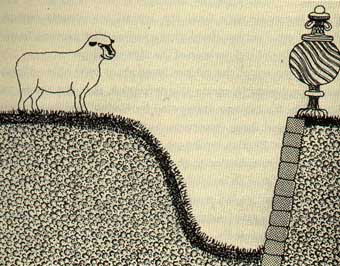
Ha-ha

Isn't gardening all about creating views? And should that view not go beyond... what is not yours but could be seen that way? The Ha-ha is the instruments that helps to create a  border between your garden and the 'wilderness' beyond. It also helps to keep the sheep out. 


[wiki HAHA here...]

maandag

GARDENING [4] WIRTZ


The Belgian landscape architects Jacques and his sons Martin and Peter have designed some of the most beautiful gardens in Europe. I love their dramatic command of space and strong sculptural forms, their work combines a modernist aesthetic with a respect for tradition and the spirit of place. At the family home in Schoten, near Antwerp, a former gardener's cottage attached to an eighteenth-century estate, they have created in their private garden a laboratory for experiment on an intimate scale. 


I came across them because of the work they did for the gardens of the Louvre around the Arc Du Petit Carrousel. The use of hedges and the playfull walks you can make, enjoying the height differences and views, make it worth a visit. Well everybody visiting passes through anyway.


It's hard to find good photos of what I'm talking about. Behind the Maillols you can see the garden, but you cannot look inside. But once you are there you should walk through. 


A cute film on the Maillol statues, with more Wirtz in the background


Finally the Wirtz website

zondag

GARDENING [7] MARQUEYSSAC DORDOGNE

The Château de Marqueyssac is a 17th century chateau and gardens located at Vézac, in the Dordogne Department of France. The chateau was built at the end of the 17th century by Bertrand Vernet de Marqueyssac, Counselor to Louis XIV, on cliffs overlooking the Dordogne Valley. The original garden à la française was attributed to a pupil of André Le Nôtre, and featured terraces, alleys, and a kitchen garden surrounding the chateau.


To see the website press here it starts with a cute film...

A cute YouTube from Gardeners World

To get there, press here

woensdag

GARDENING [6] DEREK JARMAN DUNGENESS

Derek Jarman (1942-1994) was an English film director who made a famous garden on the shingle shore near Dungeness nuclear power station. The barren grounds on which he planted his garden was always under attack of the sea winds. So he went with the flow...


http://www.gardenvisit.com/garden/derek_jarman_garden_prospect_cottage_dungeness

And there is a fantastic book:

GARDENING [3] OUDOLF

Over three decades, the Dutch garden designer Piet Oudolf’s sometimes unconventional ideas about what looks good have helped make him a star in Europe and have also begun to win him fans and jobs in the United States.

To start of, his ability to create a winter garden:


Nowadays Piet Oudolf's claim to fame is the creation of The High Line: http://www.thehighline.org/


Serpentine pavillion 2011: 'I hope people relax here'


Piet Oudolf's own site


donderdag

GARDENING [5] BAWA

Together the Sri Lankan Bawa brothers put 'tropical retreat' design on the map. The brothers, Bevis and Geoffrey left their mark in Sri Lanka, where they originated, but also on Bali and the other beautifully beached HOT spots, from Bali to Bermuda.
Bevis was the gardener, Geoffrey the architect. His biggest achievement in worldly architecture probably being his Houses of Parliament in Colombo, capital of Sri Lanka.
But what the two of them together are really responsible for is the mark they put on tropical retreats.
The design of world famous hotels like the Balinese Amandari or the private housing compound of Taman Mertasari were all based on their invention of monsoon leisure.
The Taman Mertasari I visited mid nineties, was initiated by Brent Hesselyn and partners.  Brent was an Australian who ran the ceramic factory Jengala. [I say ran, because he was lost at sea in 2002] 
Geoffrey Bawa (1919-2003) is far better known than his brother. After training in England to be a lawyer, he turned to architecture. He designed the island’s Parliament complex as well as many other public buildings but made his reputation with his hotels, like the mile-long Heritance Kandalama outside of Dambulla, which seems to grow out of the jungle, and the Jetwing Lighthouse in the coastal city of Galle. Geoffrey’s practice of combining native materials with international modernist style has become hugely influential around the world.
Geoffrey began his garden, called Lunuganga, in  the late 1940s. Sited on a former rubber plantation, its main feature is a large lake at the bottom of a steep hill. The English landscape movement heavily influenced his plan. Wide swathes of lawn stretch toward the lake from the original house (now a hotel), dotted with Frisian cows (Geoffrey loved black and white everywhere and adored Dalmatian dogs), water gardens, and miniature rice paddies. A crenelated folly, prettily painted guest bungalows, and artfully placed statuary add to the English feel.
Geoffrey had no doubts about the relationship between a designer and his garden. His philosophy was dedicated to the notion of man’s domination over nature; he moved water, hills, and trees without hesitation. “The long view to the south ended with the temple,” Geoffrey wrote, “but in the middle distance was a ridge with a splendid ancient moonamal tree, and when I placed a large Chinese jar under it, the hand of man was established in this middle distance.” Yet Geoffrey’s genius was to create a landscape so naturalistic that it could hardly be identified as man-made. Ondaatje tells the story of a visitor to Lunuganga exclaiming, “But Mr. Bawa, wouldn’t this be a lovely place to turn into a garden?” Geoffrey said this was the best compliment he ever received.

Bevis Bawa (1909-1992) used his skills on gardening in, what he called; Brief Garden. Named Brief Garden because his father purchased the land after a successful legal brief, Bevis’ garden is farther inland than his brother’s, and though it embraces the same tropical landscape, it reflects Bevis’ unruly temperament and casual approach to life.

Bevis
Ten years older than Geoffrey and handsome at 6 feet 7 inches, Bevis volunteered for the Ceylon Light Infantry, serving until his artistic pursuits and his garden won the day. He is described in my guidebook as a “bon vivant” a careful euphemism. Openly gay (the garden is full of statues with huge male organs and gargoyles with saucy expressions, some of them made by Bevis), he gave wild parties at his house, which provided many alcoves and nooks for trysting purposes. One visitor, Australian artist Donald Friend, came for a few days and stayed nearly six years, contributing greatly to the collection of homoerotic art.
Bevis started his garden (also a former rubber plantation) in 1929, almost 20 years before his brother. His design follows narrow winding pathways through dense tropical foliage, runs up and down slopes, then suddenly opens onto a staircase, a patio, a pond, or a strategically placed piece of sculpture. Walking through it one feels that Bevis somehow tamed the jungle for his purposes, but only momentarily—stray from the path and you are back in the forest.
Visiting both gardens in one day, I was struck by the variety of emotions they elicited. Bevis’ garden, which I saw first, was the wilder of the two but somehow more comforting and intimate. A drenching monsoon rain had just ended, leaving a steamy and muggy atmosphere with drops of water still trembling on the palm fronds and rivulets of rain racing across the paths like little snakes. No other tourists ventured out in such torridly humid weather, and no guide appeared to accompany me. Yet I did not feel lonely. The paths took me from vista to vista, each more breathtaking than the last. I felt I was being led by an invisible docent who told me where to stop and look or where to sit and rest. It was magical. At every turn I was aware of the giant palms and tropical plants looming overhead, ready to pounce and return to the jungle the land Bevis had so cunningly captured.
Geoffrey’s garden had the opposite effect. A guide walked me through the long landscaped vistas of paddy fields with the lake as a backdrop, through the carefully arranged clumps of trees, up Cinnamon Hill past the Frisians grazing in the meadow. At the top of the hill, I enjoyed the long view back toward the main house. Everything felt open to the sky. This garden felt almost familiar to this Englishwoman, particularly the presence of the happily grazing cows. Only occasionally did glimpses of tropical plants in the interstices of the garden remind me of where I was.
As I strolled back through Geoffrey’s elegant, controlled landscape, images of the rather more outrageous elements of Bevis’ garden flashed through my mind and I began to laugh. Later, I asked David Robson, author of Bawa: The Sri Lanka Gardens (Thames & Hudson; 2008), how he felt about the two gardens. “Brief is introspective,” he wrote to me, “a series of outdoor rooms with almost no views toward the outside. ... It is the more decorative, more eclectic of the two. … Geoffrey Bawa may have set out to create a Sri Lankan version of a European garden, but in the end he created something that owes more to Sri Lankan garden-making and landscape traditions.”
So Bevis made his garden and Geoffrey made his, and after seeing the results, even if you knew nothing about the men who made them, you could do some pretty accurate speculating about their personalities. Whatever their differences, Bevis and Geoffrey dug out two incontestable masterpieces from the rich Sri Lankan soil, producing two separately inspired gardens that belong together as a family record for generations to come.

OTHER PLACES TO SEE IN SRI-

The Royal Botanic Gardens in Peradeniya, Sri Lanka, northeast of Colombo, cover 147 acres along the Mahaweli River and has allées of more than 200 species of palms, an orchid house, a giant Java fig tree, and a Victorian-style annual garden.

Geoffrey Bawa-designed hotels can be found throughout Sri Lanka.
     Kandalama in Dambulla
     Club Villa in Bentota
     Lighthouse in Galle.
     Gallery Cafe Geoffrey’s former offices, now turned into a chic restaurant, remains an enchanting example of his architectural genius.


Lunuganga fotoserie


Bawa gardens on Flickr


Bawa hotels


Travelling Bawa


Brief Garden:


Brief Garden plan

Brief Garden pictures 

Preparing A BAWA TRIP. Look at this. 7D6N In the Footsteps of Geoffrey Bawa, Sri Lanka

TEA:
For a completely different experience, visit the town of Nuwara Eliya in the mountainous central region of the island where most colonial tea plantations were established. The town is full of English-style cottages and is a great base from which to explore the plantations (some offer tastings) and see the gorgeous spectacle of tea bushes planted in neat rows along the hillsides. 

zaterdag

JIM DENEVAN [LAND ART 1]

Today I discovered Jim Denevan. Some pictures on FaceBook / design-dautore.com made me curious. Jim makes temporary drawings on sand earth and ice that are eventually erased by waves and weather. Contrary to the seventies land-art, this, in my opinion doesn't try to bear more importance then it can offer us: an extra way of seeing the specific beauty of a place...

There is also a certain kind of contemplating quality in the making of these works. Listening to the story in this film, you recognize the meaning of the work for himself.


GARDENING [2] COSMIC SPECULATION / JENCKS


Charles Jencks Garden Of Cosmic Speculation.
Charles Jencks has been making the most interesting postmodern garden in Britain. Jencks, as the leading theorist of postmodernism, has a strong theoretical base 
Apart from its striking visual character, the most interesting thing about Jencks Portrack garden is the way it carries forward the ancient project of making gardens which imitate (mimesis) the Nature of nature. Jencks seeks to understand the nature of the world, through science, and to embody the nature of the world in a garden design. The pharaohs, Plato, the emperors of China, Alberti, Capability Brown, William Robinson and Charles Prince of Wales  had the same intention. The results differ because their understandings of nature differ.
One criticism I have heard of Jencks’ Portrack Garden is that he is too literal in his ‘imitations’ of physical and chemical laws, principles and formulae. While not seeing this as a fault, I agree with the observation. The alternative would be to use the revelations of science as Jencks’ renaissance predecessors used optics and mechanics to produce remarkable visual effects and devices in gardens. Outside the garden realm, one of the most dazzling examples of what might be done, from the nineteenth century, is the Foucault Pendulum, demonstrating the rotation of the earth. “The direction along which the pendulum swings rotates with time because of Earth’s daily rotation. The first public exhibition of a Foucault pendulum took place in February 1851 in the Meridian Room of the Paris Observatory. A few weeks later, Foucault made his most famous pendulum when he suspended a 28-kg bob with a 67-metre wire from the dome of the Panthéon in Paris. The plane of the pendulum’s swing rotated clockwise 11° per hour, making a full circle in 32.7 hours.”  It is not too late to be making Foucault Gardens, Foucault-inspired gardens and other gardens inspired by a scientific understandings of Nature.

woensdag

GARDENING [1] PATRICK DOUGHERTY

Sculptor Patrick Dougherty has been creating stick-work since 1982. He has exhibited all over the world, from the swamps of Ireland to American city centres. The scale and beauty of his work has kept him in constant demanD. There are films of his works op both YouTube and Vimeo.
Present absences: A peripatetic video of a temporary site-specific sculpture by Patrick Dougherty from Ian Russell on Vimeo.