Posts tonen met het label designer. Alle posts tonen

zaterdag

PHILIPS' LITTLE HELPER

Are you an innovator?


Everyone has great ideas. Do you think yours could make a meaningful difference in people's lives? If so, we invite you to collaborate with Philips to bring your ideas to the market.


How does it work?

First, we will ask you a few questions to help us understand your idea. The quality and accuracy of the information you provide is crucial for us to successfully evaluate your idea. Please submit only NON-confidential information. Your idea may be similar to others that Philips has already developed independently, and we want to avoid any misunderstanding around its ownership. For that reason, we recommend that you first protect your idea with a patent (application) or other intellectual property right. You can seek advice from a patent counsel on how to do this.

After your idea is submitted, you'll receive an email confirmation right away. If we need to know more to help us to assess your idea, we may contact you for additional non-confidential information.

Within four weeks, we will email you the outcome of our evaluation. If your idea is a good candidate for inclusion in our product plans, we will contact you directly. Thank you for sharing your idea with us.


More to be found here

zondag

SCAPES [MUSIC]


Can machines create original music? 

Scape is the answer to that question.
Scape makes music that thinks for itself. From Brian Eno and Peter Chilvers, creators of Bloom, Scape is a new form of album which offers users deep access to its musical elements. These can be endlessly recombined to behave intelligently: reacting to each other, changing mood together, making new sonic spaces.
It employs some of the sounds, processes and compositional rules that have been used by Brian and Chilvers for many years and it applies them in fresh combinations, to create new music. 
Scape makes music that thinks for itself.


- Brian Eno, Peter Chilvers
Includes 15 original scapes
Scapes can be saved into a gallery and added to a playlist
Plays in background of other apps (excluding iPad 1)
Generates random scapes
Scapes can be shared by email
Supports AirPlay and Retina display
Headphones or external speakers recommended
Brian Eno
Synthesiser, found sound, bells, bass guitar, strategies, images, art direction
Peter Chilvers
Synthesiser, chapman stick, structures, probability networks, additional images, software design.


Here's an example of a Cape / iPad / User / Composer


donderdag

MOLLINO

tabletop


Domus had a wonderfull article on Carlo Mollino's Casa Miller. I'm not going to cite, but to invite: Have a look HERE.

No idea who Carlo Mollino is? Well an intriguing Italian designer. A bit dark, very elegant, something of an erotic photographer, independant. I guess much looked at and, no worry,  inimmitable.

Ok then, some examples:

table

living room

ALDO VAN DEN NIEUWELAAR

Kunst + Interieur, a modern antique shop in the centre of The Hague houses some designs by Aldo van den Nieuwelaar. Probably they were his on the moment of his death. Most objects were lamps from the mid seventies.
Last time I visited, I was stopped by this large B/W picture. But that's ...
And I took this iPhone picture. This is how we got to know him in The KABK [Koninklijke Academie van Beeldende Kunsten, in The Hague]
I always state he was one of my 'greatest' teachers. His approach to teaching was new then and is still interesting today. 


Aldo died 23 september 2010 [wiki] still rather young, being born in 1944.

His circular tube lamp, which I bought some time in the late seventies is a iconic classic now.


SORI YANAGI

Sori Yanagi, the Japanese designer famous for his Butterfly Stool made from two identical plywood mouldings, has died in Tokyo aged 96. [Yanagi was born in Tokyo in 1915] His career spanned a period which saw the birth of post-war Japan's industrialisation.


Both pictures and the news were found on DomusWeb

GARDENING [5] BAWA

Together the Sri Lankan Bawa brothers put 'tropical retreat' design on the map. The brothers, Bevis and Geoffrey left their mark in Sri Lanka, where they originated, but also on Bali and the other beautifully beached HOT spots, from Bali to Bermuda.
Bevis was the gardener, Geoffrey the architect. His biggest achievement in worldly architecture probably being his Houses of Parliament in Colombo, capital of Sri Lanka.
But what the two of them together are really responsible for is the mark they put on tropical retreats.
The design of world famous hotels like the Balinese Amandari or the private housing compound of Taman Mertasari were all based on their invention of monsoon leisure.
The Taman Mertasari I visited mid nineties, was initiated by Brent Hesselyn and partners.  Brent was an Australian who ran the ceramic factory Jengala. [I say ran, because he was lost at sea in 2002] 
Geoffrey Bawa (1919-2003) is far better known than his brother. After training in England to be a lawyer, he turned to architecture. He designed the island’s Parliament complex as well as many other public buildings but made his reputation with his hotels, like the mile-long Heritance Kandalama outside of Dambulla, which seems to grow out of the jungle, and the Jetwing Lighthouse in the coastal city of Galle. Geoffrey’s practice of combining native materials with international modernist style has become hugely influential around the world.
Geoffrey began his garden, called Lunuganga, in  the late 1940s. Sited on a former rubber plantation, its main feature is a large lake at the bottom of a steep hill. The English landscape movement heavily influenced his plan. Wide swathes of lawn stretch toward the lake from the original house (now a hotel), dotted with Frisian cows (Geoffrey loved black and white everywhere and adored Dalmatian dogs), water gardens, and miniature rice paddies. A crenelated folly, prettily painted guest bungalows, and artfully placed statuary add to the English feel.
Geoffrey had no doubts about the relationship between a designer and his garden. His philosophy was dedicated to the notion of man’s domination over nature; he moved water, hills, and trees without hesitation. “The long view to the south ended with the temple,” Geoffrey wrote, “but in the middle distance was a ridge with a splendid ancient moonamal tree, and when I placed a large Chinese jar under it, the hand of man was established in this middle distance.” Yet Geoffrey’s genius was to create a landscape so naturalistic that it could hardly be identified as man-made. Ondaatje tells the story of a visitor to Lunuganga exclaiming, “But Mr. Bawa, wouldn’t this be a lovely place to turn into a garden?” Geoffrey said this was the best compliment he ever received.

Bevis Bawa (1909-1992) used his skills on gardening in, what he called; Brief Garden. Named Brief Garden because his father purchased the land after a successful legal brief, Bevis’ garden is farther inland than his brother’s, and though it embraces the same tropical landscape, it reflects Bevis’ unruly temperament and casual approach to life.

Bevis
Ten years older than Geoffrey and handsome at 6 feet 7 inches, Bevis volunteered for the Ceylon Light Infantry, serving until his artistic pursuits and his garden won the day. He is described in my guidebook as a “bon vivant” a careful euphemism. Openly gay (the garden is full of statues with huge male organs and gargoyles with saucy expressions, some of them made by Bevis), he gave wild parties at his house, which provided many alcoves and nooks for trysting purposes. One visitor, Australian artist Donald Friend, came for a few days and stayed nearly six years, contributing greatly to the collection of homoerotic art.
Bevis started his garden (also a former rubber plantation) in 1929, almost 20 years before his brother. His design follows narrow winding pathways through dense tropical foliage, runs up and down slopes, then suddenly opens onto a staircase, a patio, a pond, or a strategically placed piece of sculpture. Walking through it one feels that Bevis somehow tamed the jungle for his purposes, but only momentarily—stray from the path and you are back in the forest.
Visiting both gardens in one day, I was struck by the variety of emotions they elicited. Bevis’ garden, which I saw first, was the wilder of the two but somehow more comforting and intimate. A drenching monsoon rain had just ended, leaving a steamy and muggy atmosphere with drops of water still trembling on the palm fronds and rivulets of rain racing across the paths like little snakes. No other tourists ventured out in such torridly humid weather, and no guide appeared to accompany me. Yet I did not feel lonely. The paths took me from vista to vista, each more breathtaking than the last. I felt I was being led by an invisible docent who told me where to stop and look or where to sit and rest. It was magical. At every turn I was aware of the giant palms and tropical plants looming overhead, ready to pounce and return to the jungle the land Bevis had so cunningly captured.
Geoffrey’s garden had the opposite effect. A guide walked me through the long landscaped vistas of paddy fields with the lake as a backdrop, through the carefully arranged clumps of trees, up Cinnamon Hill past the Frisians grazing in the meadow. At the top of the hill, I enjoyed the long view back toward the main house. Everything felt open to the sky. This garden felt almost familiar to this Englishwoman, particularly the presence of the happily grazing cows. Only occasionally did glimpses of tropical plants in the interstices of the garden remind me of where I was.
As I strolled back through Geoffrey’s elegant, controlled landscape, images of the rather more outrageous elements of Bevis’ garden flashed through my mind and I began to laugh. Later, I asked David Robson, author of Bawa: The Sri Lanka Gardens (Thames & Hudson; 2008), how he felt about the two gardens. “Brief is introspective,” he wrote to me, “a series of outdoor rooms with almost no views toward the outside. ... It is the more decorative, more eclectic of the two. … Geoffrey Bawa may have set out to create a Sri Lankan version of a European garden, but in the end he created something that owes more to Sri Lankan garden-making and landscape traditions.”
So Bevis made his garden and Geoffrey made his, and after seeing the results, even if you knew nothing about the men who made them, you could do some pretty accurate speculating about their personalities. Whatever their differences, Bevis and Geoffrey dug out two incontestable masterpieces from the rich Sri Lankan soil, producing two separately inspired gardens that belong together as a family record for generations to come.

OTHER PLACES TO SEE IN SRI-

The Royal Botanic Gardens in Peradeniya, Sri Lanka, northeast of Colombo, cover 147 acres along the Mahaweli River and has allées of more than 200 species of palms, an orchid house, a giant Java fig tree, and a Victorian-style annual garden.

Geoffrey Bawa-designed hotels can be found throughout Sri Lanka.
     Kandalama in Dambulla
     Club Villa in Bentota
     Lighthouse in Galle.
     Gallery Cafe Geoffrey’s former offices, now turned into a chic restaurant, remains an enchanting example of his architectural genius.


Lunuganga fotoserie


Bawa gardens on Flickr


Bawa hotels


Travelling Bawa


Brief Garden:


Brief Garden plan

Brief Garden pictures 

Preparing A BAWA TRIP. Look at this. 7D6N In the Footsteps of Geoffrey Bawa, Sri Lanka

TEA:
For a completely different experience, visit the town of Nuwara Eliya in the mountainous central region of the island where most colonial tea plantations were established. The town is full of English-style cottages and is a great base from which to explore the plantations (some offer tastings) and see the gorgeous spectacle of tea bushes planted in neat rows along the hillsides. 

woensdag

YSL

I will always be fascinated by YSL. His rise and, almost yearly but never actually, fall...
His master craftmanship never wavered. I found this endearing film on Another Magazine.

MOT 1 [MAN OF TALENT] ANDY MACGREGOR

Andy Macgregor, handsome model and wicked stylist in one... Always a delight to look at his website. So delectable. What I like about his work is the craftiness of it. No wonder we [the old fashioned teachers of beauty] still want students to draw, cut and paste... 

Here's Andy 

And here's a querschnitt of his work... but please go to his site and browse....


dinsdag

THINGS ORGANIZED NEATLY

Jan Heijnen* tipped me about Things Organized Neatly. A site you can visit to see daily uploads of little collections people took pictures of. You can look at it randomly or just follow the stream...

Either it be a holiday collection of souvenirs....


Or a nicely made drawing of your travel kit...


Keep us posted if you post an entry! 

Jan Heijnen is a Dutch / The Hague graphic designer doing some neat organizing on his website too...

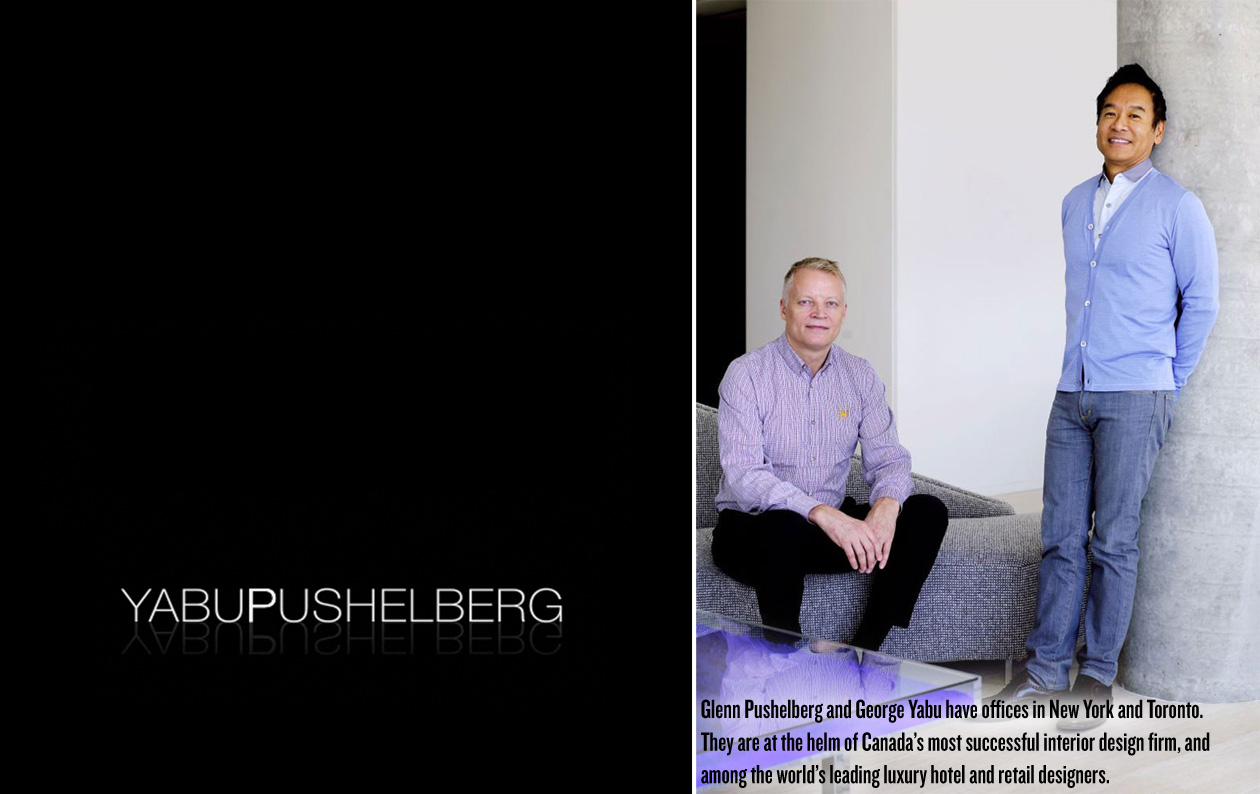
HOME OF INTERIOR DESIGNERS YABU & PUSHELBERG

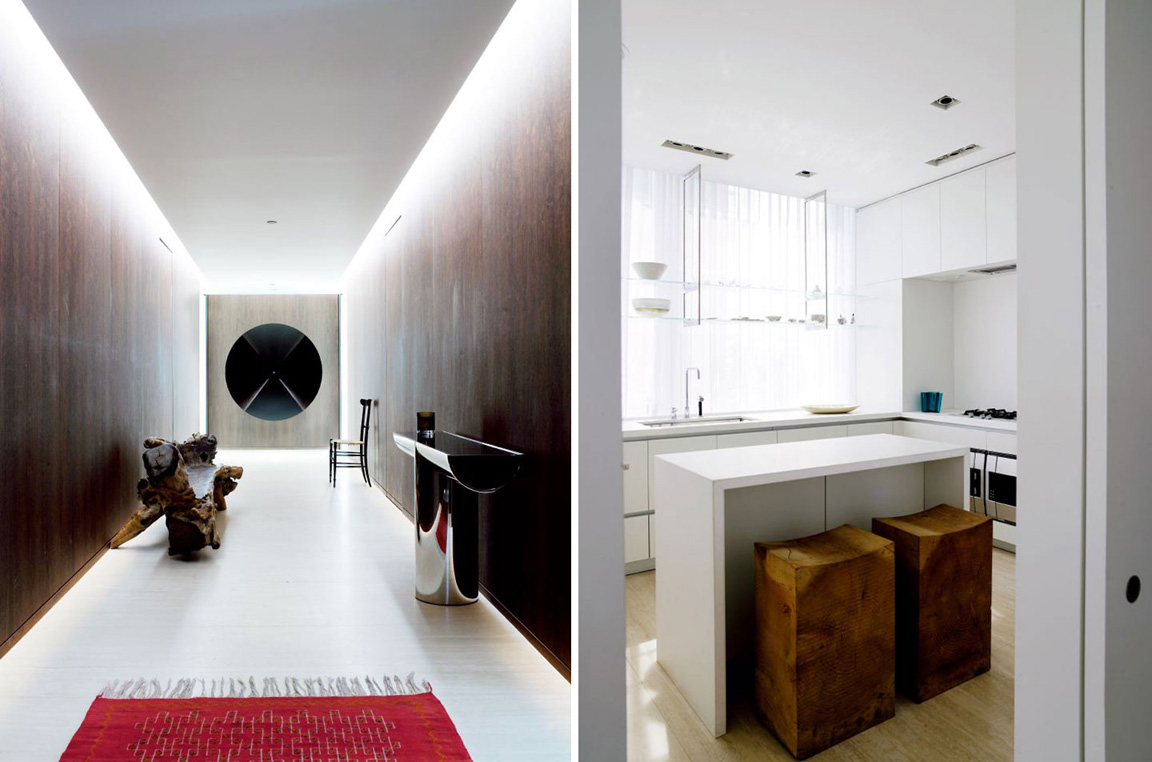
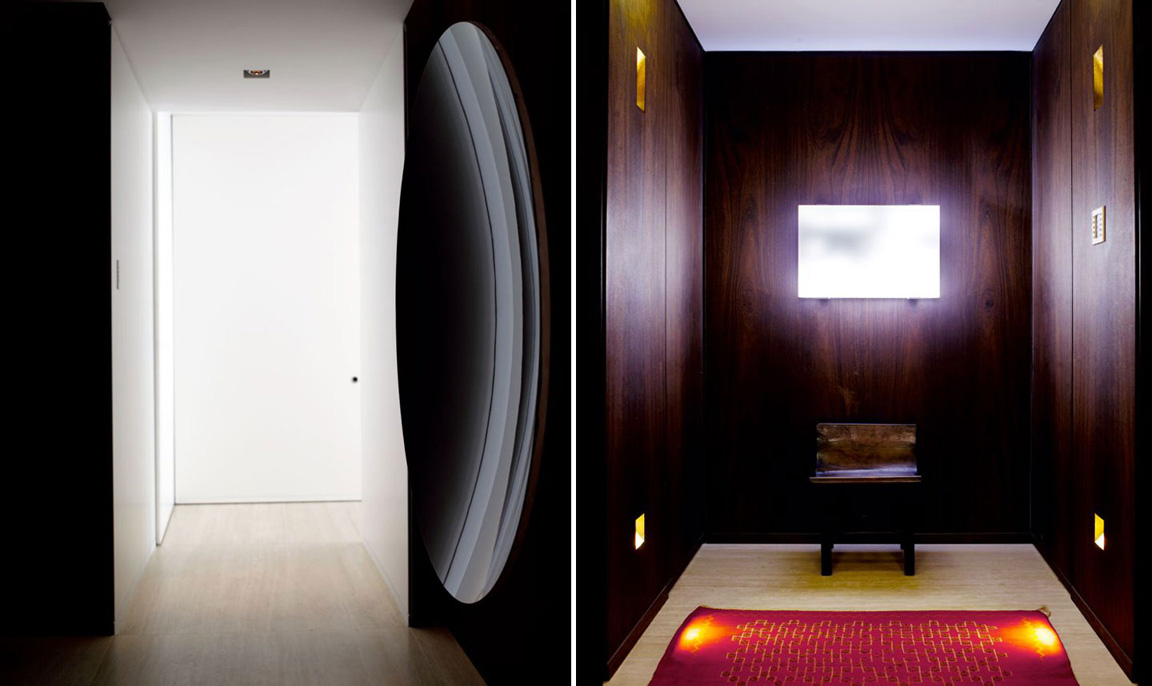
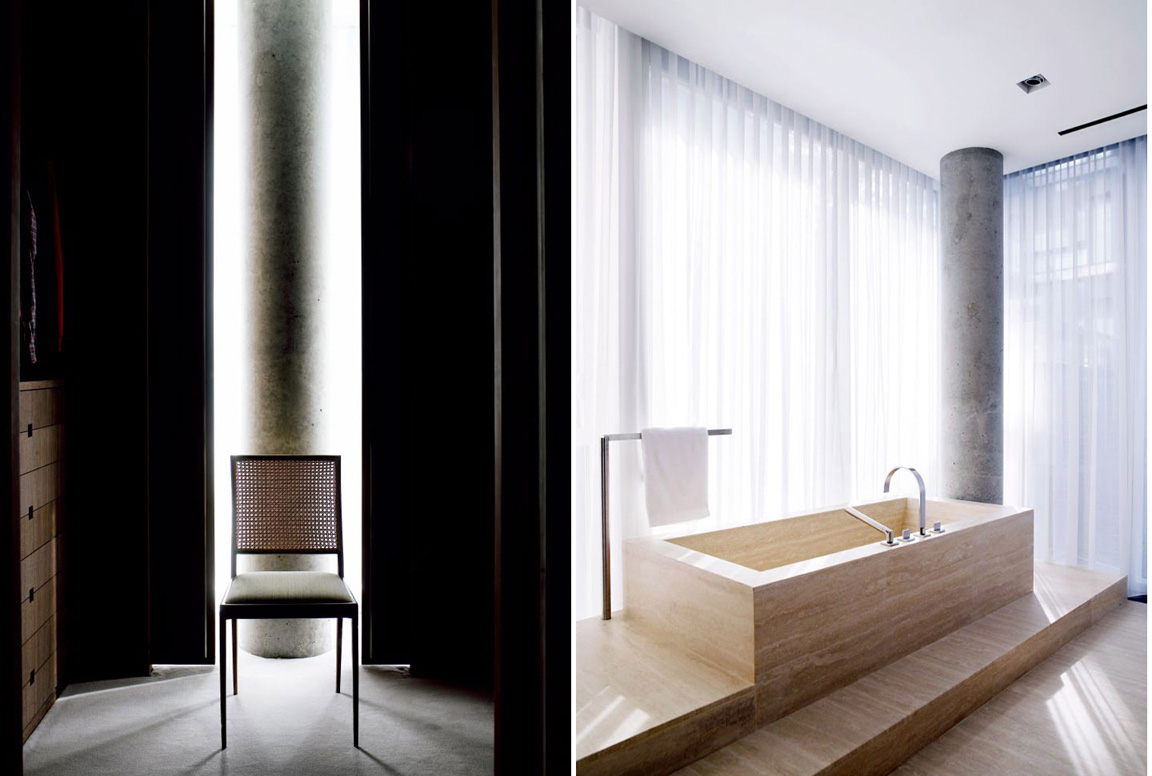
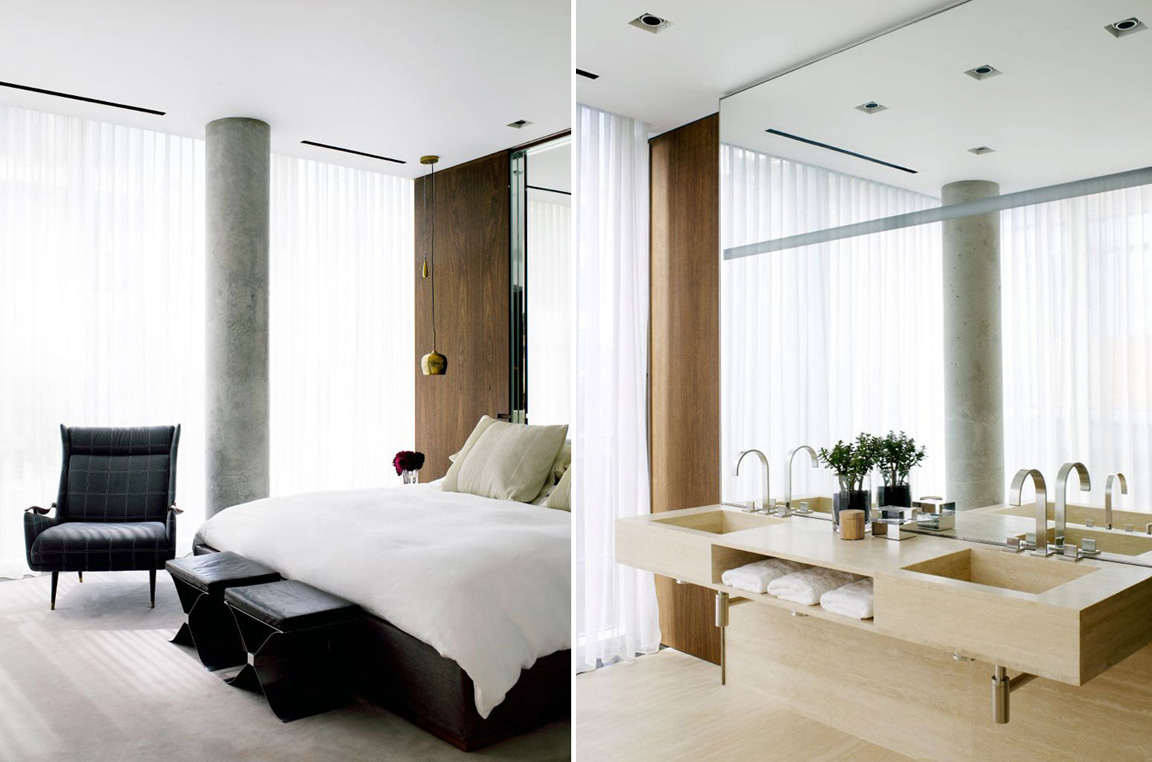
Renowned Designers Yabu Pushelberg Let The World Inside Their Incredible New York City Home

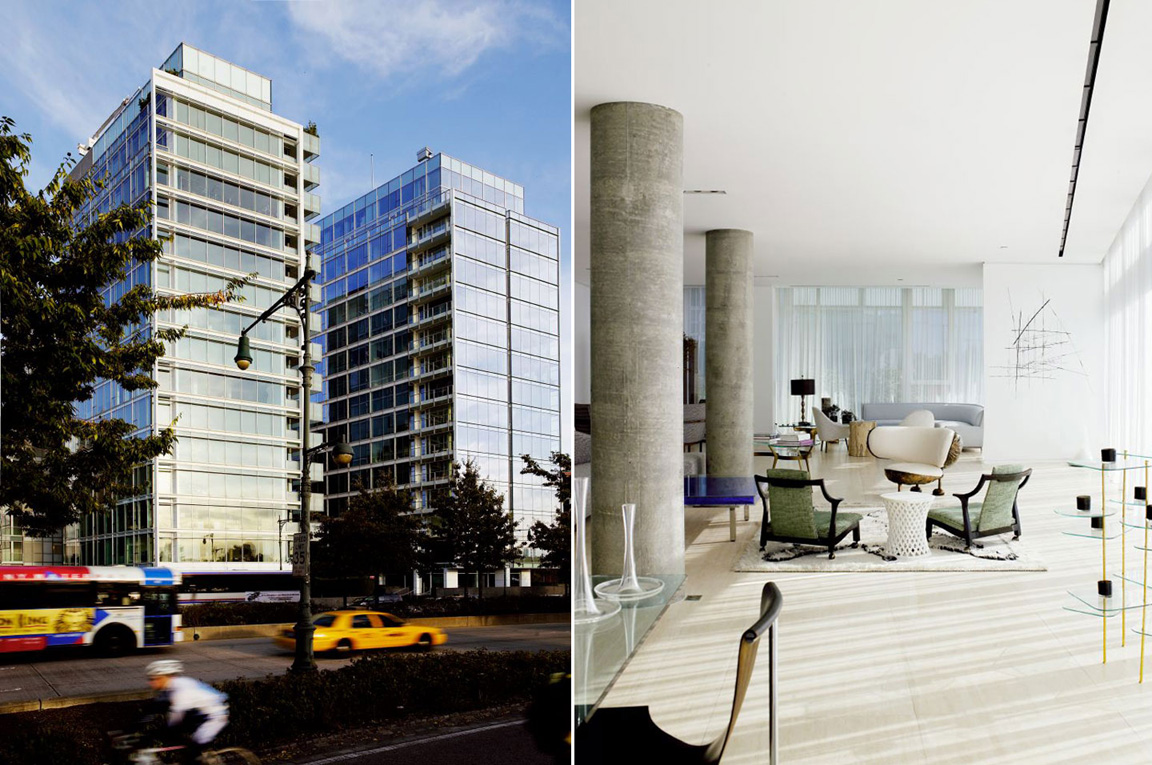
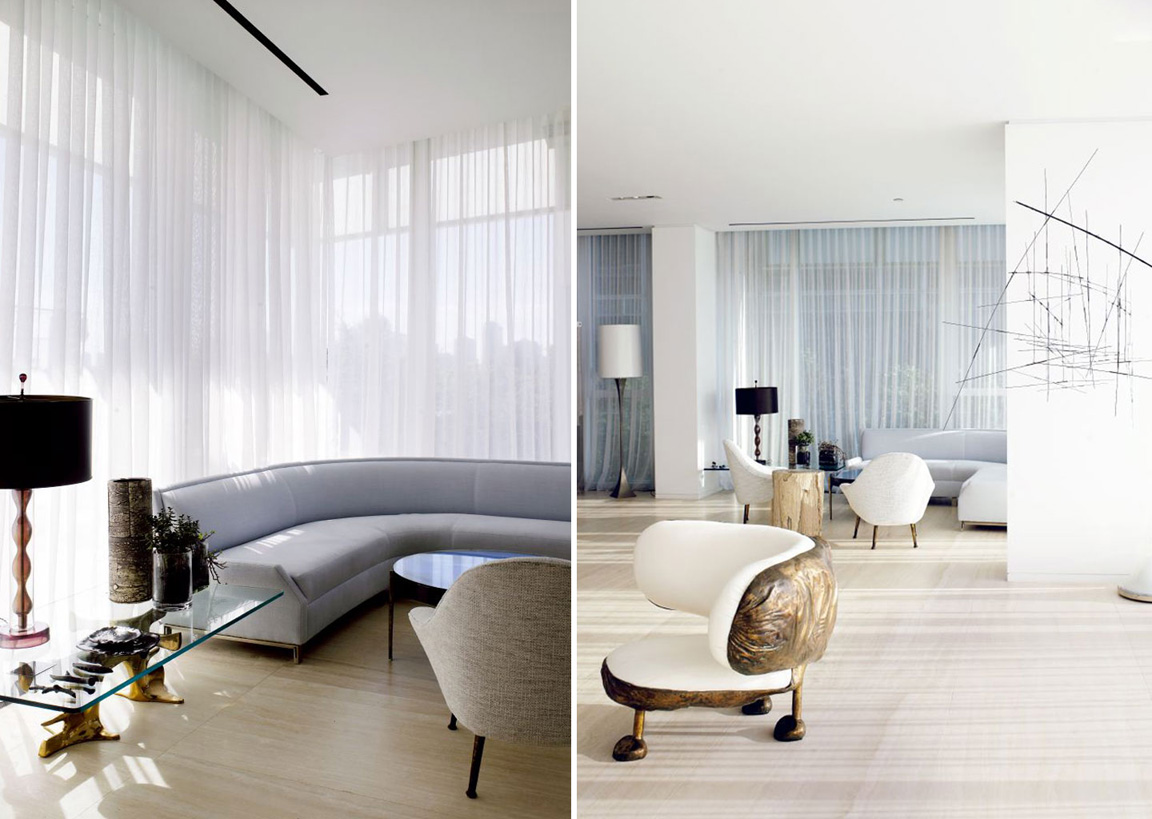
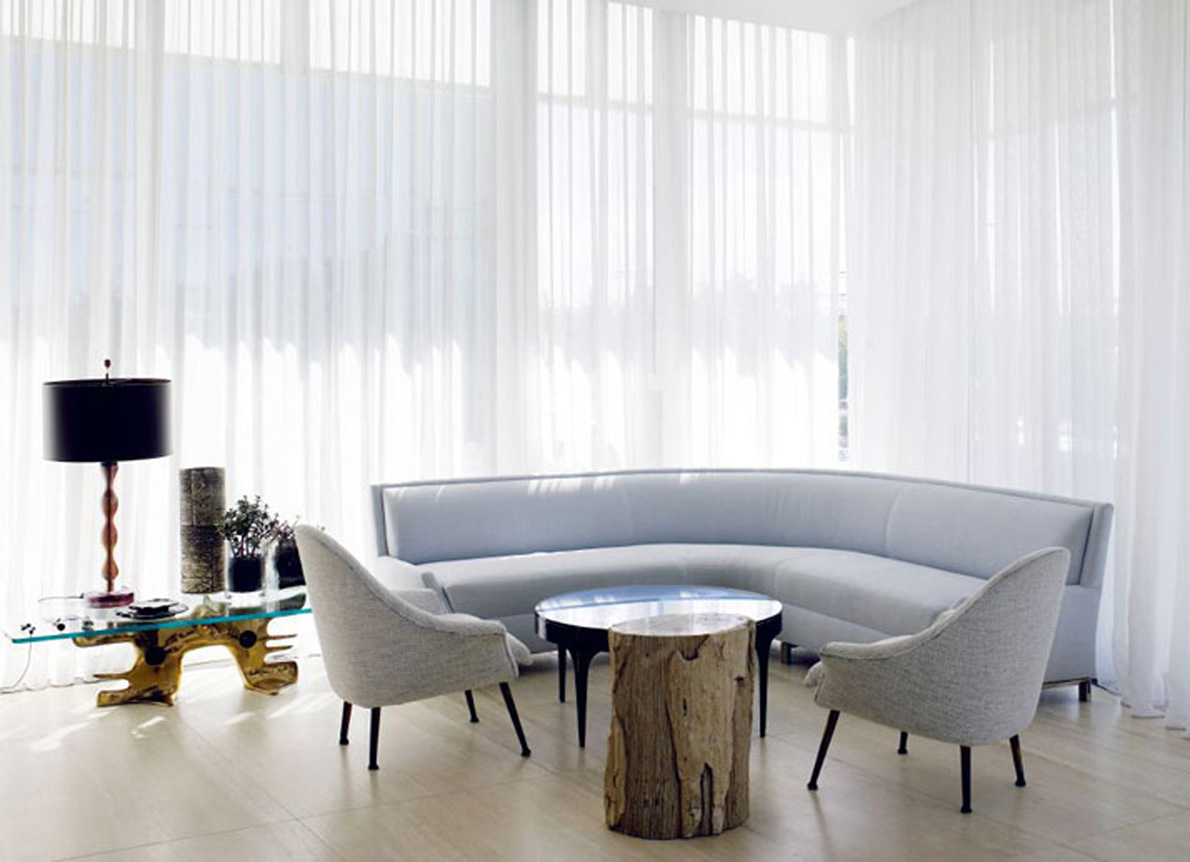
George Yabu and Glenn Pushelberg, the award-winning designers behind the iconic firm Yabu Pushelberg, were named designers of the year by Contract magazine and have been inducted into the ID magazine Hall of Fame.  Not only business partners, George and Glenn have been life partners for 31 years now, and recently let the world into their New York home (they have 3 homes, but consider this one their favorite).  Located within the Richard Meier-designed tower on Perry Street in New York City, the 4000 square foot apartment also features breathtaking views of the Hudson River.  The couple purchased the home in 2004 and it came with a mere skeletal structure: a toilet and mirror were the only two objects that were part of the existing space.
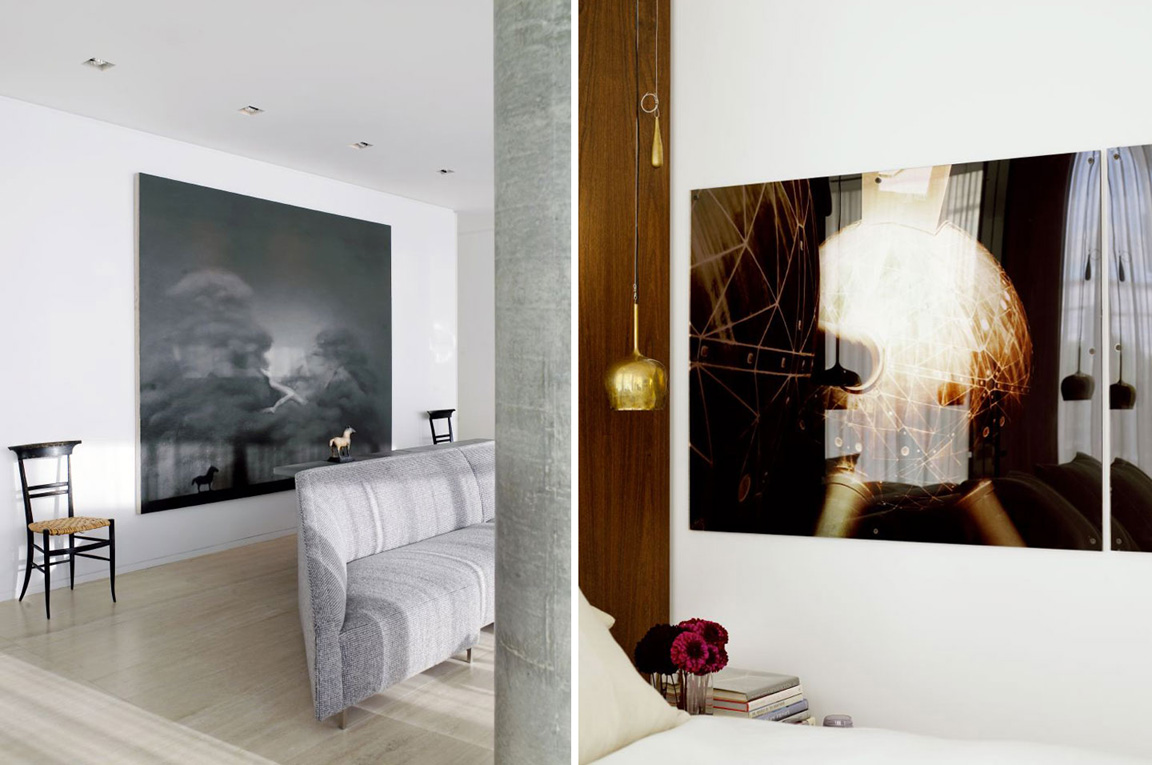
A very good friend of mine whom I studied with while getting our Architecture degrees together, worked for Yabu Pushelberg for years and I was priveleged to get the inside scoop of life at the firm. Apart from being the two most talented interior designers in the world, they are also the most loving, appreciative, and respectful bosses anyone could ever dream of working for.  Working for these two masters becomes a labor of love from day one once you notice the amount of care, detail, and thoughtfulness that they infuse into their work. And their Perry Street home was no exception; for example, the travertine floors were completely ripped up not once, but twice to get them just right.  And the long bench in the hallway is made from a fallen tree that was found at the bottom of a lake in India.  One look at the following photos gives you a great idea of how carefully considered each element and object is to the overall scheme.  Eclecticism is de rigueur at Yabu Pushelberg, and their brilliantly curated and arranged objects are enough to take your breath away.  The white woven rug from Italy, the various art pieces from Japan, the Parisian Lucite screen, the Brazilian jacaranda credenza, the deer head adorned with glass balls by Japanese artist Kohei Nawa, and the extraordinary cast-bronze chair from Nienkämper.  And that’s just for starters.
As I get older and more fixated on my own personal style, it takes a lot to blow my mind.  But this morning, seeing these images did just that.  A staggering work of sublime beauty, George and Glenn’s Perry Street home in New York is not only their dream home, it’s mine as well. Pure amazingness. To see more examples from their legendary portfolio be sure to visit YabuPushelberg.com (photos © Richard Powers).


Source: Yatzer and Richard Powers

woensdag

FORNASETTI APPT

Some years ago I happened to visit the guest appartment of Fornasetti. It is situated at the end of a Milanese garden, overgrown by rododendrons and rubberplants. I was happy to find these pictures on the net, as my visit was at night and without a camera. The main building houses the Fornasetti design workshops. I'll post some pictures of these mysterious rooms some other day. [meanwhile, here is a link to the house!]
The totally interesting thing about the guest house is the combination of new and old, all with an extreme eye for detail. The sense of classicism, use of color and style, made the visit a fysical experience.


One enters the appt from the garden, into the cum newspaper / butterfly overthrown / patterned kitchen and dining area.

   Old paintings from the Fornasetti workshop furnish an antique atmosphere.
Butterflies seem to be going everywhere... 
A few steps lead up to a sittingroom / bedroom. The idea of classical columns is provided by some old engravings of Roman triumphal columns.


 The bathroom of which I hope to add some pictures one day, was in black and gold tiles, all of fornasetti's well known ornamentation suns and faces...


Update end 2011: a good friend of mine had the opportunity to stay in the Fornasetti appt's just recently. Here some iPhone shots he send me...


On the site of Fornasetti there are great pictures of the house to be seen, although the atmosphere is, to my idea, not well captured. link to the house

maandag

THINK INTO THE BOX

You must login or signup to comment
Click here to find out more!
The Parisian architect Stéphane Malka turned an empty room into a gorgeous minimalist landscape by filling it with the humblest of humble objects, the cardboard box.


The Parisian architect Stéphane Malka turned an empty room into a gorgeous minimalist landscape by filling it with the humblest of humble objects, the cardboard box.
The installation, Rue Sans Frontieres (No Limits in the Streets), was made up of hundreds of boxes painted semi-gloss white, then glued together and thrown up around 2,045-square-foot gallery in Moscow. Like a happy Cubist explosion, they littered the walls, the floor, and the ceiling. It's what you might've gotten had you put Picasso and Kengo Kuma in a Mail Boxes Etc. together.


The exhibit was designed for a Moscow arts fair, and unfortunately, it isn't up any more. Check more photos and Malka's artist's statement here.
[Images courtesy of Stéphane Malka]