Posts tonen met het label ideas. Alle posts tonen

zaterdag

HOW TO THINK LIKE SHERLOCK HOLMES

Now, with new Sherlocks appearing everyday, somebody's got the idea to interrogate the interrogator:

What is it that separates Sherlock Holmes from his long-suffering friend and side-kick Dr John Watson? 
What makes Holmes such a superior detective, able to piece together clues and solve problems that seem elementary to Watson only in hindsight? 
This book puts 21st century neuroscience and psychology in service of understanding Holmes' methods.

What is it that separates Sherlock Holmes from his long-suffering friend and side-kick Dr John Watson? What makes Holmes such a superior detective, able to piece together clues and solve problems that seem elementary to Watson only in hindsight? And can we - most of us Watsons ourselves - ever harness a bit of Holmes' extraordinary powers of mind, not to solve crimes, but simply to improve our lives at work and home? The answer is yes, and in "Mastermind", psychologist Maria Konnikova shows us how. Using plots and passages from the wonderfully entertaining Holmes stories, she illuminates how Arthur Conan Doyle's detective embodies an ever-present mindfulness, and how this active mental disposition proves foundational to his success. Beginning with Holmes' concept of the 'brain attic' - a metaphor for the information we choose to store in the mind and how we organise our knowledge, Konnikova unpacks the mental strategies that lead to clearer thinking and deeper insights. Moving through principles of logic and deduction, creativity and imagination, "Mastermind" puts 21st century neuroscience and psychology in service of understanding Holmes' methods. With some self-awareness and a little practice, we can all employ these methods to develop better strategies, solve difficult problems and enhance our creative powers. Writing for Holmes fans and casual readers alike, Konnikova has translated what so many of us love about the great detective into a remarkable guide to upgrading the mind.
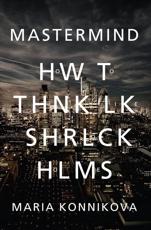

ISBN: 9780857867247 - Mastermind

BLACKWELL BOOKSHOP

donderdag

IDEAS TO LIVE BY

At The School of Life all is possible, courses, holidays, 'bibliotherapy', meals, sermons, events and psychotherapy. There's also a shop and ist here that they sell Aphorisms [a set of cards or posters with a clever text, a bit à la Dutch Loesje


The course bear agreeable names like:
How To Be Cool?
How To Have Better Conversations.
How To Find A Job You Love.
How To Spend Time Alone.
How to be a good friend.

zaterdag

GARDENING [2] COSMIC SPECULATION / JENCKS


Charles Jencks Garden Of Cosmic Speculation.
Charles Jencks has been making the most interesting postmodern garden in Britain. Jencks, as the leading theorist of postmodernism, has a strong theoretical base 
Apart from its striking visual character, the most interesting thing about Jencks Portrack garden is the way it carries forward the ancient project of making gardens which imitate (mimesis) the Nature of nature. Jencks seeks to understand the nature of the world, through science, and to embody the nature of the world in a garden design. The pharaohs, Plato, the emperors of China, Alberti, Capability Brown, William Robinson and Charles Prince of Wales  had the same intention. The results differ because their understandings of nature differ.
One criticism I have heard of Jencks’ Portrack Garden is that he is too literal in his ‘imitations’ of physical and chemical laws, principles and formulae. While not seeing this as a fault, I agree with the observation. The alternative would be to use the revelations of science as Jencks’ renaissance predecessors used optics and mechanics to produce remarkable visual effects and devices in gardens. Outside the garden realm, one of the most dazzling examples of what might be done, from the nineteenth century, is the Foucault Pendulum, demonstrating the rotation of the earth. “The direction along which the pendulum swings rotates with time because of Earth’s daily rotation. The first public exhibition of a Foucault pendulum took place in February 1851 in the Meridian Room of the Paris Observatory. A few weeks later, Foucault made his most famous pendulum when he suspended a 28-kg bob with a 67-metre wire from the dome of the Panthéon in Paris. The plane of the pendulum’s swing rotated clockwise 11° per hour, making a full circle in 32.7 hours.”  It is not too late to be making Foucault Gardens, Foucault-inspired gardens and other gardens inspired by a scientific understandings of Nature.

donderdag

ABOUT ARCHITECTURE WALK INTO A CLOUD

Yverdon-les-Bains, Switzerland - 2002

The Blur Building
The Blur Building was built for the Swiss Expo 2002 on Lake Neuchatel. It is an architecture of atmosphere. The lightweight tensegrity structure measures 300 feet wide by 200 feet deep by 75 feet high. The primary building material is indigenous to the site, water. Water is pumped from the lake, filtered, and shot as a fine mist through 31,500 high-pressure mist nozzles. A smart weather system reads the shifting climactic conditions of temperature, humidity, wind speed and direction, and processes the data in a central computer that regulates water pressure.
Upon entering the fog mass, visual and acoustic references are erased, leaving only an optical "white-out" and the "white-noise" of pulsing nozzles. Blur is an anti-spectacle. Contrary to immersive environments that strive for high-definition visual fidelity with ever-greater technical virtuosity, Blur is decidedly low-definition: there is nothing to see but our dependence on vision itself.


Look: http://www.designboom.com/eng/funclub/dillerscofidio.html


How they obtained the blur effect


the saturation of the air with moisture, which produces
the visible mist effect, depends on a number of physical
environmental conditions.
these parameters include the speed and direction of the
wind, the environmental temperature and the
atmospheric humidity :
- the higher the temperature, the greater the amount of
moisture required to produce the necessary degree of
saturation.
- when the air has a moisture level of, for example,
75 percent, the desired effect can be achieved by the
addition of only 25 percent.
- the volume of the space determines the output quantity
necessary for the saturation of the air with moisture.
in calm (windless) conditions the volume corresponds
to the size of the space. in windy conditions, however,
the determining volume is proportionate to the amount
of air moved by the wind through the specific space.
thus it increases with increasing wind speed.
- since mist hangs in the air, it moves in the direction of the
wind. starting at the point where the water leaves the jet,
a white stripe becomes visible. as soon as the air is no longer
saturated with moisture, this white stripe disappears.
at low temperatures with simultaneous high air moisture,
the stripe is virtually always visible. when the conditions are
reversed, it disappears almost immediately.
- putting the cloud into operation under consideration of all
these meteorological conditions is a highly complex technical
proceeding. appropriate adjustments can be made on various
levels, e.g. the placement of the spray mechanisms,
the number of jets, planning of different spraying areas.
the optimisation of these measures is carried out with the help
of a computerised weather station that supplies the necessary
nformation about the relevant parameters.
this information is analysed by the computer and subsequently
used to determine the adjustment of the spraying on the basis
of conclusions reached in connection with tests carried out the
year before.

dinsdag

IMAGES 4 CONCEPTS

Perrine Lievens [bois et sucre] Click


Anneliese Wolf Click

Diller, Scofidio + Renfro - Blur Building, Yverdon-les-Bains, Switzerland Click


Yang Yi Click


maandag

THINK INTO THE BOX

You must login or signup to comment
Click here to find out more!
The Parisian architect Stéphane Malka turned an empty room into a gorgeous minimalist landscape by filling it with the humblest of humble objects, the cardboard box.


The Parisian architect Stéphane Malka turned an empty room into a gorgeous minimalist landscape by filling it with the humblest of humble objects, the cardboard box.
The installation, Rue Sans Frontieres (No Limits in the Streets), was made up of hundreds of boxes painted semi-gloss white, then glued together and thrown up around 2,045-square-foot gallery in Moscow. Like a happy Cubist explosion, they littered the walls, the floor, and the ceiling. It's what you might've gotten had you put Picasso and Kengo Kuma in a Mail Boxes Etc. together.


The exhibit was designed for a Moscow arts fair, and unfortunately, it isn't up any more. Check more photos and Malka's artist's statement here.
[Images courtesy of Stéphane Malka]

vrijdag

Let me present Significant Objects, a website, now lying a bit low, because of the book they're making. The goal: A talented, creative writer invents a story about an object. Invested with new significance by this fiction, the object should — according to our hypothesis — acquire not merely subjective but objective value. How to test our theory? Via eBay!

In other words: "Significant Objects combines one of the oldest of all media — the near-improvised short story — with the reinvigorated writer-reader relationship afforded by Web 2.0." — The Independent's Couch Surfer. Follow us on Twitter; join us on Facebook.


Do have alook! http://significantobjects.com/

donderdag

DO SCHOOLS KILL CREATIVITY?


On his YouTube channel TEDtalksDirector, Ken Robinson lectures on creativity. He can talk with wit and humor, like any intelligent stand-upper ...  
In the lecture: "Do schools Kill Creativity?" he shows, how the world is changing and must change with education.
I watched it, thaught and made some wishes for this school year!


vrijdag

RETROSPECTION...


TEN THINGS FOR 2010 [in dutch / imported from conceptschool.blogspot.com 

To see if there was any truth in it...

10 DINGEN VOOR IN 2010


1 / Over tot de Orde van de Dag!

Vergeet de recessie: de maatschappelijke veranderingen die 2010 zullen domineren werden ver voordat we tijdelijk in de afgrond staarden al in gang gezet.

2 / Verstedelingen

Stadscultuur is dé cultuur. De extreme verstedelijking zal in 2010 [en de komende jaren] leiden tot massale toename van veeleisende consumenten, over de hele wereld.

3 / WWWaar ben jij nu?

Meer mensen delen straks, ‘real time’, wat ze meemaken, zien, doen, kopen, beluisteren, bewonderen en zo voorts. En er zijn meer zoekmachines en meer diensten voor het bijhouden van dat alles. Op thema, onderwerp of merk, [life]style, leeftijd, etc.
2010 is het jaar van consumenten die samen [be]leven in één grote live stream van vers gedeelde ervaringen van collega-consumenten.

4 / FluctuLuxe

Nauw verbonden met de gewenste status (en die wordt steeds gefragmenteerder), willen consumenten luxe en fluctueert luxe steeds meer, al naar gelang wat consumenten willen.

5 / MassaMixen

Online levensstijlen zijn, in tegenstelling tot wat men aanneemt, een stimulans voor ‘echte’ ontmoetingen. Het is nu al zo en alle clichés en voorspellingen over een bureaugebonden, virtuele, geïsoleerde toekomst worden te niet gedaan.

6 / Eco moet Makkelijker

Om in 2010 sommige zinvolle duurzaamheiddoelstellingen écht te bereiken, moeten bedrijven en regeringen, het consumenten makkelijker maken ‘groener’ te worden. Dit kan alleen door doelmatige beperkingen van de vervuilende alternatieven.

7 / Infolust!

‘Tracking’ en ‘Alerting’ heet de nieuwe zoeken. In 2010 gaan er talloze nieuwe opsporings- en waarschuwingsdiensten ontstaan, die de consument helpen de macht over het web uit te breiden.

8 / Voorgebakken Naastenliefde

‘Goede Doelen’ worden volgend jaar, door de tijdgeest, in een andere vorm gegoten. Er komen meer pragmatische en coöperatieve ‘goede doelen’. Sociaal maatwerk voor de vrijgevige consument.

9 / Voorzorg wordt Nazorg

Met honderden miljoenen consumenten, die er een of ander online-profiel op na houden, wordt 2010 een goed jaar om bepaalde diensten in te voeren om hen [ook financieel] optimaal te laten profiteren. Dus we gaan van modellen gebaseerd op een voorzorg [kopen, betalen, zoeken] naar digitale diensten gebaseerd op nazorg [maar wat moet je er nu mee?].

10 / De Volwassenaar

2010 wordt nog eigenzinniger, gedurfder, uitgesprokener en waarschijnlijk zelfs rauwer; dan 2009. Bedank daar de ‘online-wereld’ maar voor. En jij, als ‘merk’, wordt [jij] ook gedurfder !/?

[Bron http://trendwatching.com/briefing/#business bewerking Rob Verhoeven 2010]

maandag

HIDE IN THE LIGHT

Strange as it seems, it sometimes pays not to hide under the staircase, but to run outside into the sunlight. Escaping an earthquake teaches us, it does. But keeping secrets on internet? Possibly. Just as you know where to send them... and put stickres on your eyes...

Here's the adress:
POSTSECRET
[American, but available in French and German]


For the Dutch there's:
BRIEFGEHEIM [Nederlands]


vrijdag

THEREFORE I AM

I read somewhere: "I organize, therefore I am." Seems an essential thing to stay alive, these days. It reminded me of a lot of other THEREFORE I AM's, so I started to look around...
First of all; well known Barbara Kruger. Recently in the reopened The Temporary Stedelijk in Amsterdam.


I shop, therefore I am http://www.barbarakruger.com/

But beside that there are more existence confirming ways to be [or not to be] 

I smell, therefor I am, of perfume fanatics Brian and Abigail;
... http://ismellthereforeiam.blogspot.com/

I tag, therefore I am, Jim Baretts, Soul Sphincter blog;
http://www.soulsphincter.com/2008/07/i-tag-therefore-i-am.html
He also does some interesting blogging on augmented reality: http://realmixed.blogspot.com/
And on pedagogy: http://blog.humlab.umu.se/

I write therefore I am, of Dutch writer Karin Spaink. Funny to click on... http://blogger.xs4all.nl/kspaink/

I organize therfore I am, seems a logical one to be amongst the existing ones, but wasn't found...

Finally...
Therefore I am... simple as that of the Boston Hard Rock, Indie band: http://www.myspace.com/thereforeiam

woensdag

CARDBOARD SAFARI & MORE


Inspiration for holiday season. Let's make a deal, no waste, no environmental damage, use inspiration and creativity... and preferably some recycled stuff...
Look at: http://www.recyclart.org/2010/11/diy-wine-cork-wreath-video-tutorial/ for a boozers wreath.

See the site Cardboard Safari for some fun in these cold and dark days before Christmas...


Cardboard Safari started of with a good substitute for hunters trophies, but widened its range. They for promise each design:

  • laser-cut for precision fit
  • a snap to assemble
  • packed flat for efficient shipping
  • looks stellar in native brown or white
  • can be painted to match your style
  • recycled and non-toxic
  • made locally - we love the planet
Below you find a collection of wooden Christmas trees of which one is also made by Cardboard Safari.


zondag

HEY, I'VE GOT YOUR STUFF

The brilliant French television producer Remi Gaillard needs no introduction, the average internet user has probably already seen one of his jokes. It's been a long time since we last heard of Remi, but that doesn't mean he has lost his sense of humor. You are warned! French parking lots and a godfather-like figure? Let's just hope it's Remi!.

dinsdag

GERD ARNTZ GRAPHIC DESIGNER

Exhibition: Isotype International Picture Language, Victoria & Albert Museum, London, 2 December 2010-15 May 2011

As a politically engaged graphic artist and designer Gerd Arntz (1900-1988) portrayed the world in wood and linoleum cuts. During the 1920s, he conveyed his vision on social wrongs and the rise of Nazism in Germany in his prints. He did this in such a simple, direct style that anyone - regardless of their education and nationality - was able to understand his images. This prompted the Viennese social scientist Otto Neurath (1882-1945) to ask him to design the symbols for the ’International system Of Typographic Picture Education’ (ISOTYPE). During his long career, Arntz made more than 4000 coherent, powerful and legible symbols and figures. We still see their traces around us on a daily basis: in pictograms featured on objects ranging from traffic signs to gameboys, and in information graphics.
This book displays many Isotypes and explains the system and its context. This overview of Gerd Arntz’s life and work includes a selection of his political prints and other rare visual material that was never published previously. With contributions from Flip Bool, Gert Dumbar, Mieke Gerritzen, Nigel Holmes, Max Kisman, Paul Mijksenaar and Erik Spiekermann.


maandag

ANDRéE PUTMAN AMBASSADRICE DU STYLE

André Putman, designer / stylist has finally got her overview in the Paris. More a kind of eighties icon, that reintroduced art-deco into the world in a new and stylish, often black and white, fashion. Known for her big studio lamps, black and white tiled bathrooms and love of Jean Michel Frank succeeded to turn this all into a typical 'Putman Style', now on show in the Hotel De Ville.


Découvrez Rétrospective "Andrée Putman, ambassadrice du style" à l'Hôtel de Ville sur Culturebox !

For a dazzling overview; Google images

vrijdag

POSSIBLE STYLE DEVELOPMENTS

Let's have a look...
A year ago Conceptschool posted these themes as a possible development for 2010. The year being almost over and done with, what came to us and what did not?

1- Kiddults
2- Health Style
3- Silver Sex
4- Media Habitat
5- Hyper Reality
6- Network Economics
7- Status Fear
8- Recession Chique
9- Green Karma
10- Indentity Management


[photo: typical kiddult behaviour]

[Photo; recession chique]

This was earlier posted on CONCEPTSCHOOL in dutch as:

1- Kid-Dults - versta de kunst niet te rijpen
2- Health-Style – het eigen lichaam wordt de betekenisdrager
3- Silver-Sex – geen midlifecrisis, maar een tweede puberteit
4- Personal Media – mobiel internet als ‘tweede huis’
5- Hyper-Reality – paralel leven in een reële en een virtuele realiteit
6- Network-Economics – het internet bepaalt, het internet schept de waarde
7- Status-Fear – er zijn meer mensen op weg naar beneden dan naar boven
8- Recession-Chique – de meest lustvolle enscenering van minder is meer
9- Green-Karma – klimaat blijft onvermijdelijk belangrijker dan recessie
10- Indentity-Management – bewuste en flexibele vormgeving van het ik

29/1/2009 / trein Berlijn - Den Haag
N.a.v. een artikel in een Duits blad over 'Neue Markt Tendenzen'.

zondag

JAN ROTHUIZEN


Jan Rothuizen Amsterdam based artist. His drawing of the workspace of mayor Job Cohen was part of the 'Zachte Atlas van Amsterdam' [soft map of Amsterdam.
Here presented is the project 'Somewhere over the Rainbow'. A selfportait without the self.
It contains a collection of pictures of men, selected because of a discovered resemblance, not just at this moment, but also in the past... and even presumed elements of the future.
Chronologically exposed they form a vision of an imaginary life. Starting as a baby and ending as an old man.
http://janrothuizen.nl/

zaterdag

LONGLASTING INSPIRATION 3

Charlie Todd is the founder of Improv Everywhere, producing, directing, performing, and documenting the group’s work for over eight years. He is also a teacher and performer of improv comedy at the Upright Citizens Brigade Theatre. Charlie is the author of Causing a Scene, a book about Improv Everywhere published by Harper Collins.
Charlie Todd was born in Columbia, South Carolina and went to school at the University of North Carolina at Chapel Hill. You can get in touch with him via this contact page.
Charlie Todd maintains a personal blog and a personal twitter account.
You can book Charlie Todd to speak at your school, conference, or corporate event.
This page was written in the third person because Charlie Todd would like it to show up first when someone Googles “Charlie Todd.” Numerous films to be found on YouTube...

woensdag

DRAWING ON THE RIGHT SIDE OF THE BRAIN


"You have two brains: a left and a right. Modern brain scientists now know that your left brain is your verbal and rational brain; it thinks serially and reduces its thoughts to numbers, letters and words… Your right brain is your nonverbal and intuitive brain; it thinks in patterns, or pictures, composed of ‘whole things,’ and does not comprehend reductions, either numbers, letters, or words."

From; The Fabric of Mind, by the eminent scientist and neurosurgeon, Richard Bergland. Viking Penguin, Inc., New York 1985. pg.1

Betty Edwards invented Drawing on the Right Side of the Brain. She thought up terms like: L-en R-modus modus... Read about it in the pretext of her book.